Finding Your Zone: How Niche Fan Communities Turn Strangers Into Your People
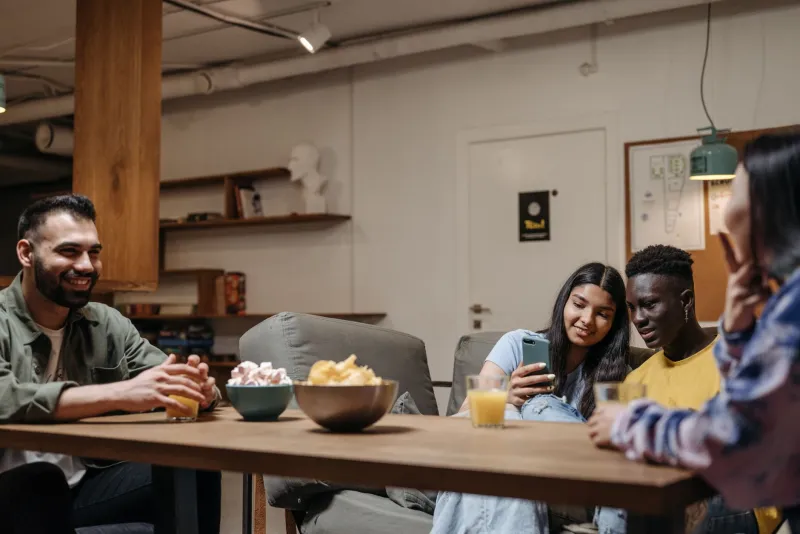
Somewhere between your third rewatch of a cult favorite and your fourteenth scroll through a fan subreddit at midnight, something shifts. You stop being a lone enthusiast and start becoming part of something. You pick up the vocabulary. You understand the references that would fly right over anyone else's head. You feel, maybe for the first time in a while, genuinely understood — and by people you've technically never met in person.
That's not a coincidence. That's community doing exactly what it's supposed to do.
The way we consume entertainment has fractured into a thousand different directions. Streaming platforms, YouTube rabbit holes, podcasts, niche newsletters, Discord servers — there is no single cultural campfire everyone gathers around anymore. And while that can feel isolating on the surface, it's quietly produced something kind of remarkable: tighter, more intentional micro-communities where the level of shared passion runs surprisingly deep.
The Secret Language That Says "You Belong Here"
Every solid fan community eventually develops its own shorthand. A specific quote becomes a greeting. A character's name becomes a verb. A deep-cut reference from episode four of season two becomes the ultimate litmus test for who's really in the know.
This isn't just fun — it's functional. Linguists and social psychologists have long recognized that shared language is one of the fastest ways humans signal group membership. When you drop a reference and someone else immediately picks it up, you've just confirmed something important: this person and I are operating on the same frequency.
In the context of entertainment fandom, that frequency is incredibly specific. It's not enough to have watched the show. You have to have felt it. The inside language filters for depth of engagement, and passing the test feels like being handed a key.
For a lot of fans, especially those who grew up feeling like their tastes were too niche, too weird, or just too much for the people around them, that moment of recognition hits hard. Finding a space where your specific obsession is not just tolerated but celebrated is its own kind of homecoming.
Identity Isn't Just What You Like — It's Where You Belong
Here's something worth sitting with: the entertainment you love isn't just entertainment. It's a signal. It tells people — and yourself — something about who you are, what you value, what makes you feel alive.
In a media landscape where the options are essentially infinite, the things you choose to spend your time on become increasingly meaningful as identity markers. You're not just a person who watches TV. You're a person who is deeply invested in this particular story, these specific characters, this niche corner of culture — and you've found other people who feel the same way.
Psychologists call this kind of group identity "social identification," and it does real psychological work. Being part of a fan community gives people a sense of continuity — a stable "us" to belong to even when other parts of life feel uncertain. It also provides what researchers describe as a sense of distinctiveness: the feeling that your group is special, that your shared taste is a mark of something meaningful.
That combination — belonging and feeling distinct — is genuinely powerful. It's the same cocktail that makes sports fandoms so intense, that makes certain music subcultures so fiercely loyal. And it's absolutely alive in the entertainment fan spaces that have taken root across the internet.
Why the Fragmentation of Media Is Actually a Feature
It's tempting to mourn the death of monoculture — the era when everyone watched the same three networks and talked about the same shows at the water cooler Monday morning. There was something unifying about that shared experience.
But here's the flip side: monoculture was never actually for everyone. Plenty of people spent decades feeling like their tastes didn't fit the mainstream, like the things they cared about were too small or too strange to matter. The fragmentation of media didn't create alienation — it revealed the alienation that was already there, and then handed people the tools to find their way out of it.
Niche communities thrive precisely because they don't have to appeal to everyone. A fan space built around an obscure animated series from the early 2000s, or a specific genre of independent music, or a beloved-but-canceled drama that only ran two seasons — these communities are small by design, and that smallness is the point. When everyone in the room is really there for it, the conversation gets richer, the connections go deeper, and the sense of mutual understanding becomes almost startlingly real.
The Andy Zone Principle: Your Entertainment, Your World
This is something we think about a lot here at The Andy Zone. The whole premise of this space — your destination, your world — is built on the idea that entertainment isn't one-size-fits-all, and that finding the specific corner of pop culture that speaks to you is worth celebrating, not apologizing for.
When you find your people, you're not just finding folks who like the same stuff. You're finding people who process the world in a similar way. Who find meaning in similar places. Who laugh at the same things, get emotional at the same moments, and care deeply about stories that maybe the broader culture hasn't fully caught up to yet.
That's rare. And it matters more than we usually give it credit for.
What It Actually Feels Like to Find Your Zone
If you've experienced it, you know. There's a specific quality to the moment when a fan community clicks for you — when you post something you've been thinking about for weeks and people don't just respond, they build on it. When someone articulates something about your favorite piece of media that you felt but couldn't quite put into words. When the group chat is somehow funnier, warmer, and more interesting than most conversations you have in the physical world.
It feels personal. It feels like being seen. And in a media landscape that can often feel overwhelming and impersonal — where algorithms are doing their best to predict you but rarely fully understand you — that feeling is genuinely hard to replicate.
The communities that do it best aren't necessarily the biggest ones. They're the ones with the most genuine shared investment. Where the passion is real, the language is alive, and the welcome mat is out for anyone who shows up with the same kind of love for the thing that brought everyone together.
Go Find Your People
If you haven't found your zone yet — your specific, weird, wonderful corner of entertainment fandom — it's out there. The subreddit, the Discord, the fan forum, the group chat that never sleeps. The community that already knows the references you've been waiting to make.
The entertainment is just the starting point. The people are the destination.
And when you find them? You'll know.