You've Never Met Them, But It Feels Like You Have: The New Rules of Celebrity Connection
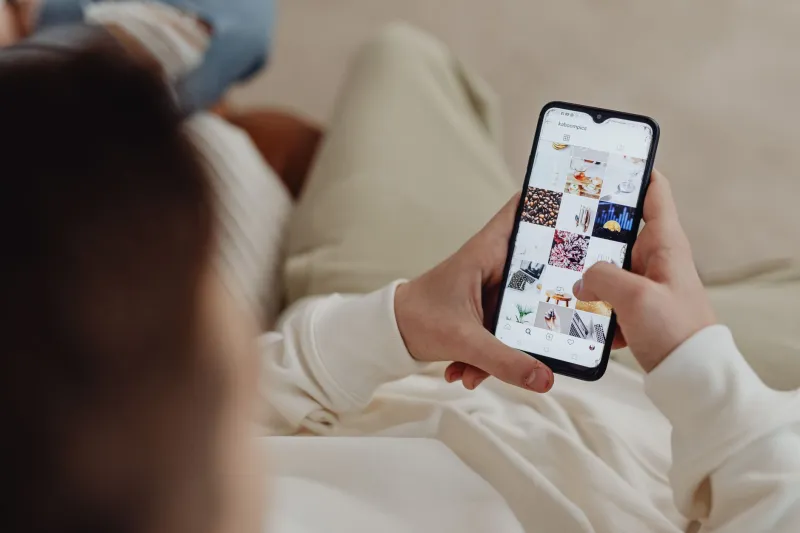
Here's a scenario that probably sounds familiar: you're watching someone's latest video, listening to their podcast, or scrolling through their stories, and without really thinking about it, you catch yourself nodding along like you're in the same room. You know their coffee order. You know their dog's name. You know the city they grew up in and the ex they never quite got over. And somewhere in the back of your mind, a strange little thought surfaces — I feel like I actually know this person.
You don't. But the feeling is real. And increasingly, that feeling is the whole point.
Welcome to the new era of celebrity — one where the distance between fan and figure has collapsed in ways that would have seemed genuinely science-fiction to audiences even twenty years ago.
What Parasocial Actually Means (And Why It Stopped Being a Clinical Term)
Psychologists coined the term "parasocial relationship" back in the 1950s to describe the one-sided emotional bonds people form with media personalities. Back then, it was mostly about TV hosts and radio personalities — people who spoke directly to the camera or the microphone, creating the illusion of intimacy in your living room. The relationship was always one-directional. They didn't know you existed.
That part hasn't technically changed. But everything around it has.
What's different now is the texture of the connection. Social media, podcasts, YouTube vlogs, live streams, Discord servers, Reddit AMAs — all of it has created an environment where celebrities aren't just performing for an audience. They're performing with one. They respond to comments. They repost fan art. They cry on camera during hard weeks and laugh along with inside jokes that their community helped create. The parasocial relationship hasn't disappeared — it's just gotten a serious upgrade in how convincing it feels.
And that's where things get genuinely interesting.
The Illusion That Doesn't Feel Like One
Here's the psychological twist that makes this whole thing so compelling: knowing something is a constructed experience doesn't automatically make it feel less real. You can understand, on a rational level, that a YouTuber with four million subscribers doesn't have a personal connection with you specifically. And yet, when they mention something you also love, or share a struggle you've quietly been carrying, something in your brain lights up the same way it does when a friend gets you.
That's not a bug. That's neuroscience doing exactly what it's designed to do.
Our brains aren't particularly good at distinguishing between real social bonds and simulated ones, especially when the simulated ones are fed to us in consistent, emotionally resonant doses. Regular content consumption — watching someone's face, hearing their voice, tracking their life across platforms — activates the same social processing systems that handle your actual relationships. Over time, your brain starts filing that person somewhere adjacent to "people I know."
For a lot of fans, that filing system is the whole appeal.
Celebrity Has Always Been Personal — Now It's Personalized
There's a version of this dynamic that's existed for as long as celebrity has. Think about the Sinatra hysteria of the 1940s, or Beatlemania in the '60s, or the way an entire generation felt like they personally lost something when Kurt Cobain died. Fan culture has always involved deep emotional investment in people you'll probably never meet.
But there's a meaningful difference between feeling connected to someone's art and feeling connected to the person themselves. That line has gotten blurry in ways that are genuinely new.
The modern content ecosystem is built on the latter. Audiences don't just want the album or the movie or the performance — they want the behind-the-scenes, the unfiltered moment, the sense that they're getting the real version. And creators, celebrities, and public figures have largely obliged, because the data is pretty clear: people who feel personally connected to you stick around longer, spend more, and advocate harder than people who just casually enjoy your work.
In other words, the parasocial relationship isn't just a byproduct of modern celebrity. It's become a feature.
The Fan Side of the Equation
It'd be easy to frame all of this as something that's being done to audiences — a calculated emotional manipulation by savvy content creators and their marketing teams. And sure, there's some of that. But that framing misses something important about why people actually want these connections.
For a lot of Americans, especially in an era of increasing social fragmentation, parasocial relationships fill genuine gaps. They offer consistency, entertainment, and a sense of community around shared enthusiasm. Following someone whose content makes you feel seen, or joining a fandom where people get your references, isn't pathetic — it's a pretty human response to a world where building real-life community has gotten genuinely harder.
The question isn't really whether these relationships are "real." The question is what role they play in someone's actual life, and whether that role is healthy or not.
For most people? It's fine. It's fun. It's a normal part of how we engage with culture now.
What This Means for the Definition of Celebrity Itself
Here's where it gets philosophically interesting: if celebrity is now defined partly by the depth of parasocial connection a person can generate — not just their talent, their looks, or their traditional star power — then the whole concept of what it means to be famous is quietly being rewritten.
A mid-tier streamer with a fiercely loyal community of 200,000 people might generate more genuine parasocial investment than a household-name actor with 10 million casual followers. The metrics of fame and the metrics of connection have come apart, and the entertainment world is still figuring out what to do with that.
Fans, meanwhile, are voting with their attention. And increasingly, they're choosing the people who make them feel like participants rather than spectators.
The Zone Knows the Feeling
At The Andy Zone, this shift isn't abstract — it's kind of the whole vibe. The idea that entertainment can be personal, that the stuff you love says something real about who you are, and that the people you follow can feel like part of your world even when you've never shared a room — that's exactly the territory we're interested in.
Parasocial relationships aren't going away. If anything, they're going to keep deepening as technology makes the simulated intimacy even more convincing. The smart move isn't to be suspicious of the feeling — it's to understand it well enough to enjoy it on your own terms.
You don't need to have met someone for them to matter to you. That's not delusion. That's just how modern fandom works. And honestly? It's kind of remarkable that we live in a moment where connection — even the constructed kind — is this available, this accessible, and this genuinely felt.
Now if you'll excuse us, we've got a podcast to finish. You know, the one where the host feels like an old friend.