Why Fictional Characters Hit Different Than Your Actual Friends
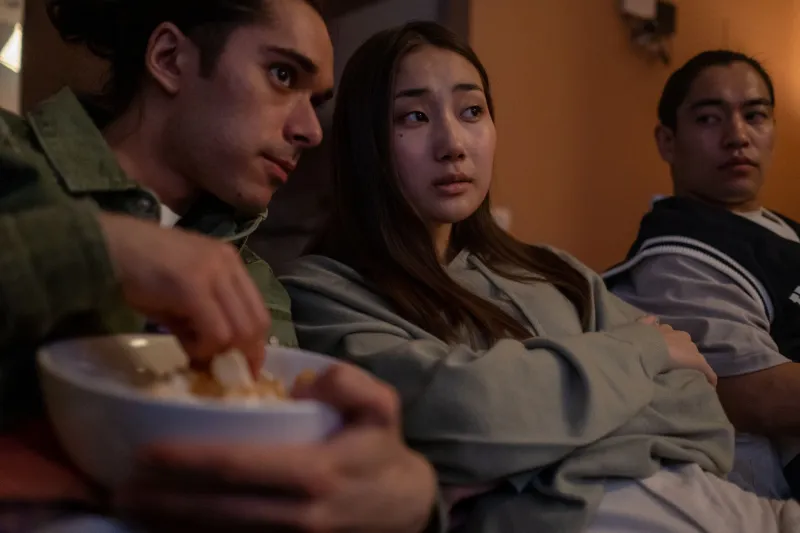
Let's just say the quiet part out loud: sometimes the characters on your screen feel more real than the people in your actual life. You know their fears, their patterns, their worst moments, and their best ones. You've watched them fall apart and pull themselves back together. And when the show ends — or worse, when they die — something in you genuinely grieves.
That's not embarrassing. That's psychology. And it says something pretty interesting about what we're all quietly hungry for.
The Setup Real Relationships Can't Always Match
Here's the thing about fictional characters that nobody talks about enough: they are designed to be known. Every line of dialogue, every nervous habit, every backstory reveal — it's all intentional. A skilled writer isn't just entertaining you. They're engineering intimacy at a pace and depth that real life rarely allows.
Your actual friends? They're complicated. They have bad days where they shut down. They don't always explain themselves. They hold things back. Sometimes they disappoint you in ways that never quite get resolved. Real relationships are messy, asymmetrical, and often emotionally unpredictable.
Fictional characters, on the other hand, show up consistently. You know when they'll be available — Thursday nights, or whenever you hit play. Their vulnerabilities are laid out for you across a season arc. Their growth is visible and trackable. You're not guessing at subtext; the subtext is the text.
Psychologists call the bond we form with fictional people parasocial relationships — one-sided connections where we invest emotionally without any reciprocal obligation. But calling it "one-sided" kind of undersells it. Because what you're getting back is something real: emotional resonance, narrative clarity, and the feeling of being let into someone's inner world.
Vulnerability on Demand
Think about how rarely people in your life say exactly what they're feeling in the moment they're feeling it. Now think about your favorite character — the one who, in the middle of a hard scene, finally says the thing they've been holding back all season. The thing that makes you pause the episode and just sit with it for a second.
That moment works because writers understand that audiences are starving for honest emotional expression. They build characters who model vulnerability in ways that most of us were never taught to do in real life. We watch someone fall apart on screen and we feel seen — not because it's our story exactly, but because the emotional truth underneath it is universal.
And here's where it gets interesting: that vicarious vulnerability can actually teach us something. Research in social psychology suggests that narrative exposure — basically, experiencing stories — can shift how we process emotions and understand others. You're not just passively absorbing content. You're practicing empathy in a low-stakes environment.
Availability Is Its Own Kind of Intimacy
One of the underrated reasons we bond so hard with fictional characters is simple: they're always there. Feeling anxious at 2 a.m.? You can queue up the show. Going through something and need a familiar face? Hit play. The character doesn't have their own stuff going on. They don't cancel plans.
That kind of consistent availability is genuinely rare in adult life. As we get older, friendships get harder to maintain. People move, get married, have kids, get busy. The easy intimacy of your early twenties gives way to scheduled catch-up calls that happen less and less. And into that gap walks a well-written character who's always exactly where you left them.
That's not a replacement for human connection — and it's worth being honest about that. But it is a real form of emotional sustenance, and dismissing it as "just TV" misses what it's actually doing for people.
What Our Attachments Reveal About Us
Here at The Andy Zone, we think your entertainment choices are personal — and we mean that literally. The characters you love most tend to reflect something you're working through, something you're missing, or something you're trying to understand about yourself.
The people who obsess over morally complicated antiheroes are often grappling with their own contradictions. The ones who love the found-family ensemble shows are frequently navigating loneliness or distance from their actual families. The people who rewatch the same comfort series every winter aren't avoiding life — they're resourcing themselves.
None of this is pathological. It's human. We've always used stories to process what's happening to us. The campfire just got a lot bigger and the stories got serialized.
The Disconnection Underneath
There's also something worth sitting with here, though — something a little less comfortable. If fictional characters feel more emotionally accessible than the real people in our lives, that might be telling us something about the state of modern connection.
We're more digitally connected than any generation in history and also, by a lot of measures, more lonely. Casual conversation has migrated to comment sections. Deep sharing often happens in parasocial spaces rather than face-to-face. We've gotten very good at performing connection and a little out of practice at the slow, imperfect, sometimes frustrating work of building actual intimacy.
Fictional characters fill a gap. But maybe they also show us the shape of the gap — and give us a language for what we're actually looking for in the real people around us.
Lean Into It, But Stay Honest
So what do you do with all of this? Honestly — enjoy it. Let yourself love the characters you love. Let them teach you things about empathy and emotional honesty. Let the good storytelling do what it's supposed to do.
But also maybe use it as a compass. The things you love most about your favorite characters? That's a pretty clear signal about what you want more of in your real relationships. The vulnerability that moves you on screen can be a template for what you try to bring — or invite — in your actual life.
The characters aren't going anywhere. And neither is the hunger they're feeding. The question is just whether you let them be a supplement to real connection or a substitute for it.
Only you can answer that one. But at least now you know why you cried when they killed off your favorite character in season three. It wasn't nothing. It was never nothing.